
Quick answer: decide first whether the safe stays bolted in one place or travels with you. For a bolted-down handgun safe that one person can install alone, the awesafe Biometric XL is the pick. Long guns in the same weight class mean a thin-wall cabinet, and the INTERGREAT 6-10 is the one to anchor. If the point is to carry it, the Vaultek LifePod 2.0 is the only pick here that is genuinely portable by design rather than by accident.
Why Buyers Shop by Weight in the First Place
Nobody wants a light safe for its own sake. The weight limit arrives from somewhere else: a second-floor bedroom, a staircase with a turn in it, a rental where a 400-pound safe is not coming back out, or a move scheduled before the next deer season. Under roughly 100 pounds loaded, those problems disappear. The safe goes up the stairs with one helper, sits on an ordinary residential floor without any joist arithmetic, and comes out again when the lease ends.
What you give up is the thing most buyers assume they are buying. Weight in a safe comes from two places: thick steel, and fire insulation. A cabinet light enough to carry has neither in quantity, which has two consequences worth being blunt about. First, none of the picks here is sold with a fire rating, and a safe marketed as both light and fireproof is almost certainly leaning on a manufacturer's own claim rather than a UL listing. Second, the pry resistance of a thin-gauge door is modest, so the lock is rarely the weak point. The seam is.
That makes anchoring the actual product decision here, which is why every pick below is judged on its mounting provisions as much as its lock. If you are weight-limited because you rent rather than because of stairs, the renter and apartment safe comparison works through the no-drill and landlord-permission angle in more detail than this page does.
Three Picks for Three Different Weight Problems
awesafe Biometric Gun Safe XL
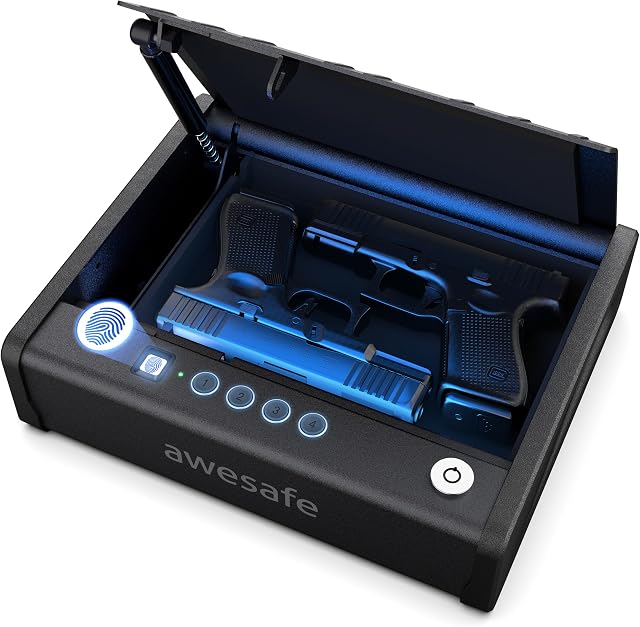
Three-way access (fingerprint, digital PIN, mechanical key) in the roomier XL body, with a 4.6-star verified-buyer average and pre-drilled holes for floor or shelf mounting. One person installs it alone, which is the whole point. No fire rating, and the XL listing advertises no gas strut, so expect a plain hinged lid.
Check price on Amazon →INTERGREAT 6-10 Large Rifle Gun Safe
Capacity for six to ten long guns in cold-rolled steel, with tool-free assembly and a digital keypad backed by both a key and an emergency override. It carries an early verified-buyer average of 4.4 stars from a small number of reviews, so treat that figure as provisional. A two-person carry rather than a one-person one, and the heaviest pick here.
Check price on Amazon →Vaultek LifePod 2.0
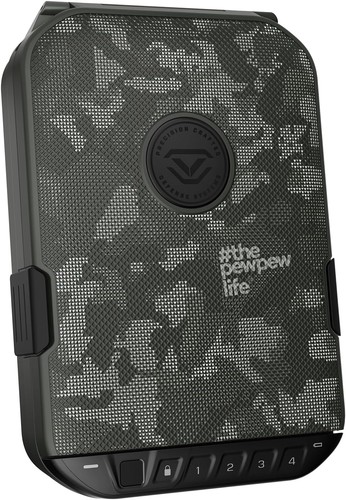
At roughly three pounds this is a locking case rather than a safe, and it is the honest answer for a truck console, a hotel room, or a range bag. Vaultek's own LifePod 2.0 product page is the reference for its specifications. Runs on a single 9V alkaline cell with a micro-USB port that can power the lock if that cell dies, and ships with a separate 48-inch steel security cable.
Check price on Amazon →The Three Picks on Weight Class and Access
Weight class below describes how the unit is installed rather than a published figure, because listed shipping weights in this category include packaging and vary between sellers for the same model. Specs verified against current Amazon listings. Ratings are aggregate verified-purchase stars.
| Safe | Brand | Weight class | Capacity | Access | Fire rating | Rating | Price | Link |
|---|---|---|---|---|---|---|---|---|
| awesafe Biometric XL | awesafe | One-person carry | 1 pistol | Fingerprint, PIN, key | Not rated | 4.6 | $$ | View |
| INTERGREAT 6-10 Rifle Safe | INTERGREAT | Two-person carry | 6 to 10 long guns | Keypad, key, override | None | 4.4 | $$$ | View |
| Vaultek LifePod 2.0 | Vaultek | Hand-carry | 1 pistol | Keypad, key | Not rated | 4.6 | $$ | View |
Price tiers are approximate. $ = under $50, $$ = $50 to 150, $$$ = $150 to 300, $$$$ = over $300. Tap any link for the current Amazon price.
Anchoring a Safe You Can Pick Up
This is the part of the category that product pages skip. On a safe under 100 pounds, the anchor is not a nice-to-have that improves an already-secure box. It is the security feature, and the published burglary pattern is why: the Bureau of Justice Statistics' household burglary analysis describes residential burglary as predominantly fast, opportunistic entry, which is a profile that favours carrying a container away over working on it in place. A light safe standing free on a closet floor is a container. The same safe bolted into framing is a problem that needs tools and time.
Two practical notes that matter specifically at this weight. First, prefer the back panel into a stud over the floor pan into a slab where the hole pattern allows a choice. Hitting solid framing is easier than drilling concrete, and it loads the fastener in shear instead of relying on thin sheet metal to hold a pull-out. Second, use the largest washers that fit. The floor pans on inexpensive cabinets are thin enough that a bolt head alone can dish or tear through the metal, which turns a correctly-sized anchor into a hole. If the install is going into a slab after all, the guide to bolting a gun safe to concrete covers anchor selection and hole depth.
One more trade-off worth naming. The lighter the safe, the more the lock matters relative to the shell, because a thief who cannot carry the box will try the fastest way in rather than the strongest. That is the argument for redundancy on the lock side as well, and the biometric gun safe roundup is the fuller field if fingerprint access is the deciding factor rather than weight.
What Owners Report After Installation
Themes paraphrased from verified-purchase Amazon reviews and from discussion on /r/CCW, /r/guns, /r/preppers and /r/homedefense:
- The install, not the lock, is what owners regret. The most common low-rating theme across light cabinets is a safe that was never anchored, usually because the included hardware did not suit the floor it landed on. Buyers who sourced their own anchors for the surface they actually had report far fewer problems.
- Thin floor pans deform under anchor bolts. Owners of budget cabinets repeatedly describe the base flexing when bolts are drawn down tight, and the fix they settle on is wide washers or a steel plate spreading the load.
- Assembly quality is the main complaint on light rifle cabinets. Reports of doors needing adjustment to latch cleanly out of the box are common in this price band, and they are usually solved at the hinge rather than being a defect in the lock.
- Portable cases get used far more than buyers expect. Owners who bought a carry case for travel describe it migrating into daily use for vehicle storage, which also means the tether cable gets used more than the lock does.
- Nobody is surprised by the absence of fire protection, but plenty are surprised by what that means for paper. A recurring theme is owners discovering after the fact that documents stored alongside firearms had no protection at all, and moving them to a separate rated box.
These notes are aggregated from public reviews. Safe Picked does not own or test the products listed and does not make first-person claims about hands-on use.
Jacob’s read on this category
Lightweight safes are the one category where the specification that sells the product is also its central weakness, and the marketing never says so. A sub-100-pound cabinet is bought for portability and then defeated by portability. The honest way to shop it is to treat the safe and its anchors as a single purchase: budget for the fasteners that suit your actual floor or wall, not the ones in the box, and decide where it is going before you decide which one to buy. Read the fire question the same way. There is no light fire safe, because the insulation is the weight, so anything in this class that claims both is claiming it on its own authority. If paper has to survive a fire, that is a second, separate box.
California Buyers and the Device Roster
Two distinct California requirements get collapsed into one in a lot of product copy, so it is worth separating them. The Firearm Safety Device roster is a point-of-sale requirement on the device: a handgun sold or transferred in the state must be accompanied by a device on the roster unless the buyer already owns a qualifying safe. That is separate from the state's gun-safe standard, which is what lets a safe without a UL burglary listing be sold in California, and separate again from the Firearm Safety Certificate, which is a certificate the buyer holds. A safe is never "FSC-approved"; the FSC is not something a product can carry.
None of the three picks on this page has been verified as roster-listed, so none is presented as a compliance solution. Among the safes this site has verified, the roster-listed pick is covered in the RPNB and Barska matchup. The Attorney General publishes the current roster of certified firearm safety devices, and it is worth a fresh look before buying because devices are added and dropped. This is factual product information, not legal advice; verify current law for your situation.
Questions About Light Safes
Does a gun safe have to be heavy to be secure?
Weight substitutes for anchoring rather than replacing it. Once a safe is bolted through its floor pan into a stud or a slab, the thief has to defeat the anchor instead of the mass, and an anchored sub-100-pound safe is harder to remove than a 300-pound safe standing free on a carpet. If you will not anchor it, buy weight. If you will, buy the lock and the steel.
Can a lightweight gun safe also be fireproof?
Almost never, for physical reasons rather than commercial ones. Fire protection comes from a thick gypsum or composite layer between the walls, and that insulation is most of what a fire safe weighs. None of the three picks here is sold with a fire rating. Paper that has to survive a fire belongs in a separate rated chest.
Is a lightweight gun safe safe to put in an upstairs room or an apartment?
Yes. Floor loading becomes a real question in the several-hundred-pound range, where the load concentrates over a single joist bay. Anything under about 100 pounds loaded sits well inside what an ordinary residential floor carries, which is the main argument for the category. In a rental the binding constraint is usually what you may drill into.
What do you anchor a lightweight gun safe to?
Through the back panel into a wall stud, or down through the floor pan into a slab with concrete anchors. The stud route is usually better here: it is easier to hit framing than to drill concrete, and it loads the fastener in shear. Use the largest washers that fit, because thin floor pans deform under a bolt head alone.
Are any lightweight safes on the California DOJ Firearm Safety Device roster?
Some devices in this size class are, but none of these three has been verified as roster-listed, so none is presented that way. The roster is a point-of-sale requirement on devices, separate from California's gun-safe standard and from the Firearm Safety Certificate the buyer holds. Not legal advice; verify current law.
How These Three Were Chosen
Every pick links to a live Amazon listing that ships within the United States, and those listings get a recurring sweep for price-tier drift, dead ASINs and rating changes. Star averages quoted here are verified-purchase figures from the most recent pass, and where a rating rests on only a handful of early reviews that is stated rather than smoothed over.
The field was scored on four things specific to this topic: whether the unit is genuinely installable by one or two people without equipment, whether it provides usable anchor points rather than decorative ones, access redundancy on the lock, and an aggregate rating at or above the 4.2-star floor this site applies to new picks. Products were held to what their own listings and manufacturer pages document, which is why no fire rating is claimed for any of them and no weight figure is quoted except where a manufacturer or its retail listings publish one.
If you spot a product that has been discontinued or a spec that has drifted, let us know.