
Quick answer: SentrySafe takes this head-to-head on certifications, with the SentrySafe SFW123 as the best-certified protection here. The flat-format SentrySafe Doc Box suits pure paperwork storage, and the First Alert 2013F is the compact budget counterpunch.
Where These Two Brands Part Ways
SentrySafe and First Alert both sell steel fire-and-water document safes, and on a quick spec sheet they look interchangeable. The meaningful differences are capacity, how you open the safe, and price, rather than the brand name on the door.
The SentrySafe SFW123 carries a UL Classified 1-hour fire rating under UL 72. That designation means an independent laboratory exposed the safe to 1700-degree Fahrenheit fire conditions for a full hour and verified that the interior stayed below 350 degrees Fahrenheit throughout. Paper chars at roughly 451 degrees Fahrenheit, so the UL 1-hour rating leaves a safety margin of about 100 degrees. The SFW123 also carries ETL verification for 24 hours of water resistance in up to 8 inches of standing water, again from a third-party lab.
The First Alert 2013F sits at the other end of the range: a compact, portable fire-and-water chest with a carry handle and a key lock, priced well below either SentrySafe option. Its waterproof seal is designed to protect contents even if the chest is submerged. It is built for a small set of essentials you may want to grab and carry, not for a cubic foot of files. First Alert publishes fire and water ratings for its chests, so confirm the exact rating and duration printed on the current listing before buying, since it varies by model.
Neither approach is wrong. For original, irreplaceable documents you want capacity plus the labeled UL and ETL ratings, which points to the SFW123. For backup copies, a starter set, or a grab-and-go kit at the lowest cost, the compact First Alert chest covers the use case.
SentrySafe: Two Formats Worth Knowing
Two SentrySafe formats appear in this comparison, and they solve different storage problems.
The SentrySafe Fireproof and Waterproof Document Box (B00GE57DFK) carries both UL fire certification and ETL water verification. The flat box format stores letter-size documents without folding, which matters for preserving paper over years. The lock is a key lock, so there is no battery to manage and no electronic keypad to fail. The tradeoff is smaller interior capacity than the SFW123 and no digital or combination access option. Price tier: $$. View on Amazon.
The SentrySafe SFW123 (B005P12C5A) is the upright cabinet format with 1.23 cubic feet of interior capacity and a digital keypad. The UL 1-hour fire rating is tested at 1700 degrees Fahrenheit, and the ETL water rating covers 24 hours in up to 8 inches of water. The digital keypad eliminates the physical-key management problem that affects the document box format. The SFW123 is heavier than most buyers expect, which is a practical anti-theft feature before anchor bolts go in. Price tier: $$$. View on Amazon.
First Alert: Compact and Portable
First Alert is primarily a fire-safety brand, and its safe line runs from compact fire-and-water chests up to larger upright units. The chest tier is priced well below either SentrySafe option in this comparison and trades interior capacity for portability.
The First Alert 2013F (B00S74DMB0) is the compact fire-and-water protector chest in this comparison. Interior capacity is about 0.17 cubic feet, it has a carry handle and a key lock, and it fits in a closet, drawer, or on a shelf. The waterproof seal is designed to protect contents even if the chest is submerged. It is sized for a small set of essential documents, a passport, and a few valuables rather than a full file drawer. Price tier: $. Check price on Amazon.
First Alert also makes larger upright safes with longer fire ratings that sit closer to the SentrySafe SFW123 on capacity. If you need more than a small chest holds, compare those models on capacity, lock type, and the fire and water rating printed on each listing rather than on price alone.
Picks for Three Scenarios
SentrySafe SFW123
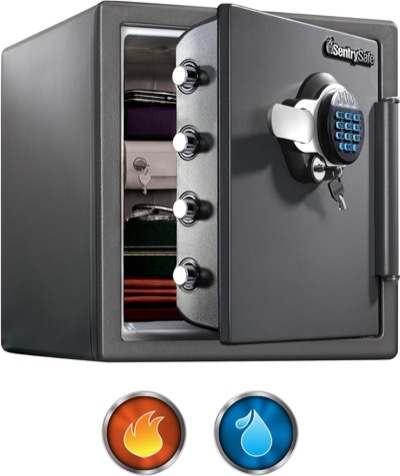
UL 1-hour fire and ETL 24-hour water from independent laboratories. Digital keypad, 1.23 cubic feet. The highest-confidence pick for passports, property deeds, birth certificates, and anything you cannot replace.
View on Amazon →SentrySafe Doc Box
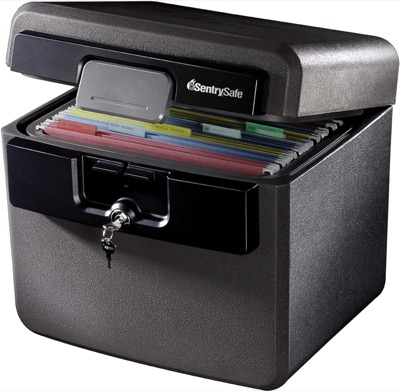
UL fire and ETL water in a flat letter-size format. Key lock, no battery dependency, smaller footprint than the SFW123. The pick for closet or shelf storage where the cabinet form factor does not fit.
View on Amazon →First Alert 2013F
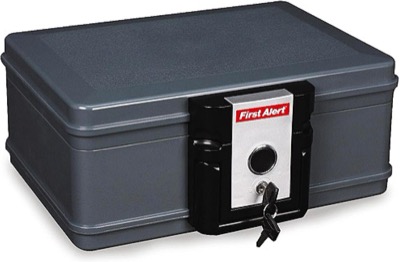
Compact fire-and-water chest, about 0.17 cubic feet, carry handle, key lock, lowest price tier. The pick when cost and portability matter most and you are storing backup copies or a grab-and-go set rather than originals.
Check price on Amazon →Side by Side
| Safe | Fire Protection | Water Protection | Capacity | Lock Type | Price | Link |
|---|---|---|---|---|---|---|
| SentrySafe SFW123 | UL 1-Hour (1700°F) | ETL Verified 24h / 8 in. | 1.23 cu ft | Digital keypad | $$$ | View |
| SentrySafe Doc Box | UL Classified | ETL Verified | Document box format | Key lock | $$ | View |
| First Alert 2013F | Fire chest (see listing) | Waterproof seal | 0.17 cu ft | Key lock | $ | View |
Price tiers are approximate. $ = under $50, $$ = $50 to 150, $$$ = $150 to 300, $$$$ = over $300. Tap any link for the current Amazon price.
One Scenario Neither Safe Covers
If your primary goal is protecting an external hard drive or SSD against fire, neither a standard SentrySafe nor a standard First Alert will do it. A UL 72 Class 350 rating keeps the interior below 350 degrees Fahrenheit for paper. Magnetic hard drives require below 125 degrees Fahrenheit and SSDs require below 150 degrees. The 200-degree gap between paper-safe and data-safe temperatures is where drives fail in fires. Dedicated media-rated safes rated to UL 72 Class 125 are a separate category and a separate purchase decision.
What Long-Term Owners Report
Themes aggregated from verified-purchase Amazon reviews and community discussions on /r/personalfinance, /r/homedefense, and /r/preppers as of June 2026:
- Humidity damage shows up before fire damage ever does. The most recurring complaint in long-term SentrySafe and First Alert reviews is moisture damage to paper from the safe's own insulation. Fireproof insulation is gypsum-based and absorbs ambient humidity. In a sealed safe, that moisture can cause mildew on paper and photographs over years without any fire event. A silica gel desiccant packet, replaced annually, prevents this entirely.
- Key lock owners lose keys. Both the SentrySafe Doc Box and the First Alert 2013F use key locks. Owners in longer-running reviews often note they lost the key within the first two years. The SFW123's digital keypad removes this failure mode, at the cost of managing a battery.
- The SentrySafe SFW123 is heavier than buyers expect. Several reviews note the unit is difficult to move after installation. For closet-floor placement, the extra weight is a practical deterrent before anchor bolts go in. Buyers who tried to install it on a high shelf note the weight as a genuine obstacle.
- Compact-chest buyers often wish they had sized up. A recurring pattern in reviews of small fire-and-water chests, across both brands, is buyers discovering the interior holds less than they pictured once a few folders and a passport go in. Owners who needed to store a full file drawer generally ended up moving to a larger upright safe like the SentrySafe SFW123. Buy the chest for a small, defined set of essentials, not as a whole-household document safe.
- Both brands see hinge stiffness at 3 to 5 years. The most common mechanical complaint across both brands at the multi-year mark is door hinge stiffness, more common in garage or basement installations with large temperature swings. Periodic hinge lubrication addresses this before it becomes a functional issue.
These notes are aggregated from public reviews. Safe Picked does not own or test the products listed and does not make first-person claims about hands-on use.
Jacob’s read on this category
The main failure mode in this category is not fire. It is moisture. Gypsum-core fireproof insulation is hygroscopic and slowly absorbs ambient humidity. Inside a sealed safe over years, that moisture builds up and damages paper and photos from the inside without any fire event occurring. A cheap silica gel desiccant packet replaced annually is the actual maintenance requirement for both of these brands, and it is mentioned almost nowhere in the marketing. The second thing buyers get wrong is sizing. A compact chest like the First Alert 2013F is genuinely useful for a passport, a few deeds, and grab-and-go essentials, but it is not a household document safe, and people who try to use it as one run out of room fast. If you are protecting a cubic foot of originals, buy the capacity and the labeled UL and ETL ratings up front, which is what the SentrySafe SFW123 gives you. Whatever you buy, read the exact fire and water rating on the listing rather than trusting the brand name, because both companies sell models across a wide range of ratings.
SentrySafe vs First Alert FAQ
Is SentrySafe or First Alert better for home document storage?
It depends on what you are storing. The SentrySafe SFW123 offers the most capacity here, a digital keypad, and UL fire and ETL water labels on its listing, which makes it the stronger choice for a cubic foot of original documents. The First Alert 2013F is a compact, portable fire-and-water chest at the lowest price, better for backup copies or a grab-and-go set. Match the safe to your capacity and access needs, and confirm the rating printed on each listing.
What does a UL fire rating mean for a safe?
A UL fire rating (under UL 72) means an independent laboratory verified that the safe's interior stays below 350 degrees Fahrenheit during a fire burning at 1700 degrees Fahrenheit for the rated duration. A manufacturer-claimed fire rating is self-reported with no third-party verification. Paper chars at about 451 degrees, so UL 1-hour rating provides a genuine safety margin of roughly 100 degrees.
Do fireproof safes protect against water damage from firefighting?
Not automatically. Fire and water are separate certifications. The SentrySafe SFW123 carries ETL water verification for 24 hours in up to 8 inches of standing water. Budget safes from both brands typically carry manufacturer water claims rather than ETL verification. Always check the two certifications independently.
Can humidity damage documents stored in a fireproof safe?
Yes. Fireproof insulation is gypsum-based and absorbs ambient humidity over time. In a sealed safe, that moisture can cause mildew on paper and photographs over years without any fire event. A silica gel desiccant packet, replaced every 6 to 12 months, prevents this in both SentrySafe and First Alert models.
What is the ETL water rating on the SentrySafe SFW123?
The SentrySafe SFW123 is ETL verified for 24 hours of water protection in up to 8 inches of standing water. ETL is an independent third-party test result, not a manufacturer claim. Budget models from both brands carry manufacturer water claims rather than ETL-certified water ratings.
Behind the Rankings
Every model compared has a live Amazon US listing, and picks are evaluated on the source of fire and water protection claims (UL, ETL, or manufacturer-only), interior capacity relative to price, lock type reliability, and long-term verified-buyer feedback patterns.
We label manufacturer-claimed specifications as such, separate from independently verified certifications. If you spot a discontinued product or a certification that has changed, let us know.