
Quick answer: the choice turns on whether fire or theft is the risk you are actually buying against. Paper money and a few coin boxes together are best served by the SentrySafe SFW123, which pairs a UL Classified 1-hour fire rating with an ETL water verification in the largest body here. Short on floor space, the SentrySafe FPW082HSB keeps that same certification pair in a smaller footprint. If the collection is valuable enough that hiding it beats insulating it, the Barska Hidden Floor Safe goes under the floor instead, with no fire rating to its name.
Cash and Coins Are Two Different Storage Problems
Paper currency wants one thing from a safe: an interior that stays cool enough to keep it from charring. Coins and bullion want the opposite of what a fire safe naturally provides, which is dry air. Metal does not burn at residential fire temperatures and it does not care about a 30-minute rating, but it corrodes steadily in humidity, and a sealed insulated box is a humid place. That split is why a single safe rarely solves both problems well, and why the honest answer for a mixed stash is a fire-rated safe with a desiccant pack living inside it.
Burglary is the third factor and the one most likely to actually happen. Entry-level fire safes are built around the fire barrier, not around pry resistance, so their security comes mostly from weight and from being anchored. If the dollar value in the safe is climbing past what a light fire box should hold, the better move is to step up to a body with real steel and a bolt-down footprint, the kind covered in our burglary-rated safes under $500 rundown, and keep the fire chest inside it.
What a Fire Rating Promises, and What It Leaves Out
A UL fire-endurance classification is a duration plus an interior temperature limit. The classes are set out in UL 72, and water resistance is verified separately, usually by Intertek under its ETL mark. The paper class holds the inside of the safe at or below 350 degrees Fahrenheit while the exterior is held at a controlled furnace temperature for the stated time, because paper chars and ignites well above that figure. A rating stated only as minutes, with no listing body and no interior limit, is a manufacturer claim rather than a classification, and the gap between those two things is the single most common way a cash safe disappoints its owner. Both keypad picks here carry UL Classified 1-hour ratings; the compact chest is listed at 30 minutes.
Water is the separate rating, and it is the one more buyers should weigh. A fire upstairs ends with hose water coming down through the ceiling, and a fire-only box in a basement is a bucket waiting to fill. The SFW123 is ETL verified for 24 hours of water protection in up to 8 inches of standing water, and the FPW082HSB carries an ETL waterproof verification as well. SentrySafe's SFW123GDC page publishes both ratings. The SentrySafe 1160 chest lists a fire rating with no water rating attached, which is fine as long as you know it and bag the contents accordingly. The same certification logic drives our fireproof document safe picks, where paper is the only cargo.
Four Picks, Four Different Jobs
SentrySafe SFW123
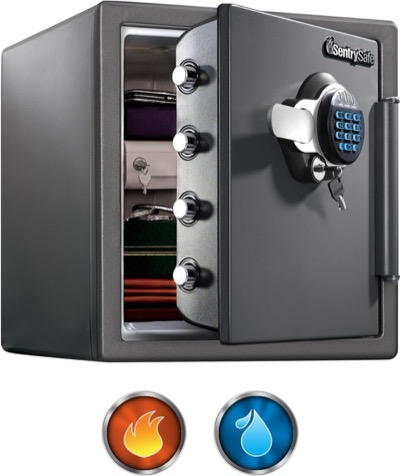
UL Classified 1-hour fire, ETL verified for 24 hours in up to 8 inches of standing water, 1.23 cubic feet, electronic keypad with a mechanical backup key. The capacity is what earns it the top slot: banded cash, a deed folder, and several coin boxes fit without stacking anything against the door. Premium end of this field, and pre-drilled for anchors.
View on Amazon →SentrySafe FPW082HSB
The same certification pairing as the SFW123, UL Classified 1-hour fire and ETL Verified waterproof, in a smaller shelved body that fits a closet floor or a cabinet base. Digital keypad with a backup key. The shelf matters more than it sounds for coins: it keeps capsules and flips off the floor of the safe, which is where any condensation collects.
View on Amazon →Barska Hidden Floor Safe
A 0.22 cubic foot steel body that installs flush in a slab, under carpet, tile, or a rug, with a key lock. No fire rating and none claimed. What it buys is concealment and immobility, the two things a bullion stack or a high-value coin set actually needs against a fast residential burglary. Mid-tier price, and the install is the real cost.
View on Amazon →The fourth pick is the cheap one worth owning anyway. The SentrySafe 1160 compact fireproof chest is a UL 30-minute fire-rated, key-locking box small enough to live inside a larger safe, which is exactly where it does its best work: it gives the paper in your floor safe or steel cabinet a fire barrier the host body does not have. Budget tier. No water rating is listed, so bag anything inside it. View on Amazon.
Ratings, Locks and Install Side by Side
Certifications below are the ones published for each listed model. A blank fire or water rating means none is listed for that product, not that protection was tested and failed.
| Safe | Brand | Fire Rating | Water Rating | Lock | Capacity | Install | Price | Link |
|---|---|---|---|---|---|---|---|---|
| SentrySafe SFW123 | SentrySafe | UL Classified 1 hr | ETL verified, 24 hr | Keypad + key | 1.23 cu ft | Floor, anchor holes | $$$ | View |
| SentrySafe FPW082HSB | SentrySafe | UL Classified 1 hr | ETL Verified waterproof | Keypad + key | Shelved compact body | Floor or cabinet base | $$$ | View |
| Barska Hidden Floor Safe | Barska | Not listed | Not listed | Key | 0.22 cu ft | In-ground, flush | $$ | View |
| SentrySafe 1160 Chest | SentrySafe | UL 30 min | Not listed | Key | Compact chest | Portable, or inside a safe | $ | View |
Price tiers are approximate. $ = under $50, $$ = $50 to 150, $$$ = $150 to 300, $$$$ = over $300. Tap any link for the current Amazon price.
The Humidity Problem Nobody Shops For
This is the part a spec sheet will never tell you. The fire barrier in an affordable safe is a hydrated composite in the walls that holds chemically bound water. Heat it and that water leaves as steam, and the steam is the mechanism that holds the interior under the rated temperature limit. It is good engineering. It also means the walls are a moisture reservoir sitting around a closed box at room temperature, which is why owners who open a fire safe after a humid summer often find a musty smell, foxed paper edges, or a dulled film on anything silver.
The countermeasure costs very little. Put rechargeable silica gel or a desiccant canister inside, note the recharge date on a calendar rather than waiting for a color indicator, and keep graded coins in inert capsules or flips instead of soft PVC holders, which release plasticizer onto metal over years. Anyone storing a collection in a larger cabinet should read the same logic applied to firearms in our guide to drying out a gun safe, because the mechanism and the fix are identical. One more thing worth knowing: do not drill your own anchor holes through an insulated wall. The pre-drilled positions exist because the manufacturer routed them around the fire barrier, and a new hole through that barrier is a direct path for heat.
What Long-Term Owners Keep Reporting
Themes paraphrased from aggregated verified-purchase Amazon reviews and public discussion on /r/preppers, /r/personalfinance, /r/homedefense and coin-collecting forums, read in October 2026:
- Interior humidity is the most common long-run complaint across every brand. Owners describe a damp or musty interior within the first year, most often in basements and in humid coastal climates, and most of them solved it with a desiccant pack rather than a different safe.
- Keypad batteries are reported as the usual service item, not the lock itself. The recurring advice is a calendar-based battery swap and a tested backup key stored outside the safe, since a dead keypad on a bolted-down fire safe is a locksmith call.
- Weight gets underestimated at delivery. Reports of a damaged floor or a two-person struggle up a staircase are common enough that it is worth measuring the route and planning the final position before the box arrives, because moving an anchored fire safe later is genuinely unpleasant.
- Collectors separate the jobs on purpose. The pattern that shows up repeatedly in forum threads is concealment and mass for the metal, a small fire-rated container for the paper, and the paper container living inside the bigger box.
- Floor-safe installs get judged on the concrete work, not the safe. Satisfaction in the in-floor category tracks almost entirely with whether the collar was set level and sealed, which is worth factoring into the real cost of that route.
These notes are aggregated from public reviews and discussion. Safe Picked does not own or test the products listed and does not make first-person claims about hands-on use.
Jacob’s read on this category
Cash and coins are the one category where the safe that passes the fire test can still lose you money, and it will not be in a fire. The insulation that keeps banknotes under their char point works by holding water in the walls, so the default state of a budget fire safe is a humid interior, and the losses collectors actually report are toning, dulled silver, and foxed paper over years of nothing happening at all. So the way I read this field: buy the certification pair you can verify, UL fire with a stated duration and an ETL water verification, then treat a desiccant pack and a recharge reminder as part of the purchase rather than an accessory. And if the value inside is high enough to attract a burglar rather than worry a fire marshal, the floor safe is the better first buy, with a 30-minute chest sitting inside it for the paper.
The Short Version
Buy the SFW123 if one box has to hold both the cash and the collection and you want certifications you can look up. Take the FPW082HSB when the space is tight and the certification pair still matters. Choose the Barska floor safe when concealment and immobility are worth more than any fire rating, and drop a 1160 chest inside it for the paperwork. Then budget for desiccant, because in this category the slow loss is the likely one.
Questions Cash and Coin Owners Ask
Will a fireproof safe actually protect paper currency in a house fire?
That is what the UL fire-endurance classification is built around. The paper class allows the interior to reach no more than 350 degrees Fahrenheit while the exterior is held at a controlled furnace temperature for the rated duration, because paper chars and ignites well above that limit. United States banknotes are a cotton and linen blend rather than wood pulp, so they behave much like the paper the test was written for. Both SentrySafe keypad picks here carry a UL Classified 1-hour rating; the 1160 chest is rated for 30 minutes.
Why do coins tarnish inside a fireproof safe?
Because the fire barrier is a hydrated composite that holds chemically bound water, and that water is what becomes the steam holding the interior cool in a fire. At room temperature the same material keeps moisture against the inside of a sealed box, so humidity inside a fire safe usually runs higher than the room around it. Silver and copper react to that moisture and to airborne sulfur with the film collectors call toning. Rechargeable silica gel and inert capsules rather than PVC holders solve most of it.
Does a UL 1-hour fire rating mean the safe is also waterproof?
No. Those are separate ratings from separate tests, and many fire-rated safes carry no water rating at all. The SFW123 is ETL verified for 24 hours of water protection in up to 8 inches of standing water and the FPW082HSB is ETL Verified waterproof, while the 1160 chest lists fire protection only. Water deserves weight in the decision because a fire one floor up ends with hose water coming down.
Is an in-floor safe better than a fire safe for a coin or bullion collection?
It is better at a different job. The Barska Hidden Floor Safe sets flush in a slab, which makes it hard to find and effectively impossible to carry off, and that is the strongest defense a bullion stack has against a quick burglary. It carries no fire rating. Surrounding concrete does add thermal mass, but that is not a tested certification and should not be sold as one. Most collectors run both, with a fire chest inside the floor safe. Our in-floor safe comparison covers the install side in more detail.
Does a cash safe need to be bolted down?
Yes, for any safe one or two people can lift. A thief who cannot open it in place will take the whole box. The fire-rated picks here ship with pre-drilled anchor holes, and using them is the cheapest security upgrade available after purchase. Use the holes provided rather than drilling new ones, because a fresh hole through an insulated wall is a path straight through the fire barrier.
How These Four Were Chosen
Shortlisting starts with the paperwork. A pick has to publish either a UL fire classification with a stated duration or, where it has no fire rating at all, an honest absence of one, and this page says so plainly in both the table and the prose rather than implying coverage that was never tested. Water verification is treated as a separate line because it is a separate test.
From there the screen is capacity against the actual cargo, lock redundancy (a keypad is only acceptable with a mechanical backup key), install method and anchor provision, and price tier relative to what the certification pair is worth. Every linked listing ships within the United States and gets swept on a recurring schedule for dead ASINs, price-tier drift, and listing health.
Spotted a discontinued model or a rating that no longer matches the manufacturer listing? Let us know and it gets checked.