
Quick answer: protecting paper from fire? Buy the SentrySafe SFW123 and bolt it down; it is the most-certified box in this comparison. Budget buyers without a fire concern get real steel for less in the Amazon Basics Steel Safe, and the KAER 2-3 Gun Safe is the pick when firearms are what you are locking up.
Start Here: Which Threat Are You Actually Defending Against?
Here is the decision tree that determines which safe belongs in your home. Answer these three questions in order before you buy.
Is your primary threat fire? Then your priority is a UL fire-rated safe. A 1-hour UL fire rating protects paper documents, passports, and cash through most residential structure fires. Read the fireproof safe guide first, and come back here if you also need burglary resistance.
Is your primary threat burglary? Then you want the most steel between you and a pry bar, plus anchor bolts set into concrete or a floor joist. Fire-protection layers in fire-rated safes are made of softer materials (gypsum board, concrete panels) that improve insulation but add pry vulnerability. A non-fire-rated steel safe at equivalent weight is typically harder to pry open than a fire-rated safe at the same price.
Do you need both? Then look for a safe that carries both a UL fire certification and a documented security rating, and accept that you will pay a premium for that combination. Very few consumer safes under $500 do both well. The SentrySafe SFW123 comes closest in this comparison.
Regardless of which path you choose, anchoring matters more than lock grade for most residential burglary scenarios. An unanchored safe under 150 pounds can be carried out of a house by two people, defeating any lock mechanism. All seven safes below include pre-drilled anchor bolt holes. Use them.
The Short List
SentrySafe SFW123
UL 1-hour fire rating (a genuine third-party certification, not a manufacturer claim). Solid bolt design and a lock mechanism that verified buyers report holding up well over several years of use. Good interior organization for documents, passports, and cash. The most broadly useful pick for a household that wants fire protection alongside meaningful physical security.
View on Amazon →Amazon Basics Steel Safe
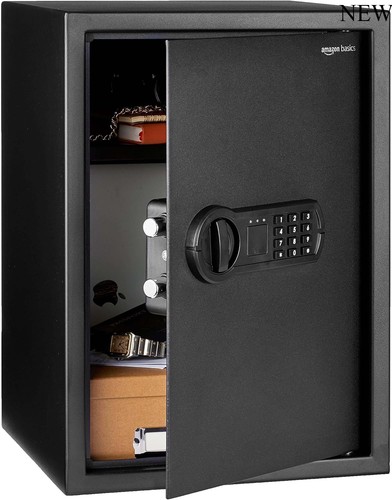
Carbon steel body, dual steel locking bolts, concealed hinges, and a programmable keypad. No fire rating. No independent burglary certification. But the physical construction is solid for the price and the pre-drilled anchor holes make it bolt-ready. The right pick when budget is the primary constraint and fire is not a concern.
Check it on Amazon →KAER 2-3 Gun Safe
Purpose-built for long gun storage. The steel gauge is heavier than a document safe at this price, the door is pry-resistant with multiple locking points, and the interior holds 2 to 3 rifles or shotguns with a handgun shelf option. Pre-drilled floor anchor holes included. No independent fire rating. The correct pick when the primary goal is securing firearms against unauthorized access.
Check it on Amazon →All Seven Safes Compared
| Safe | Type | Security Features | Fire Rating | Price | Link |
|---|---|---|---|---|---|
| Amazon Basics Steel Safe | Home / valuables | Dual bolts, keypad, concealed hinges, anchor holes | None | $$ | View |
| SentrySafe SFW123 | Home / documents | Multiple bolts, key or electronic lock, anchor holes | UL 1-hour fire | $$$ | View |
| SentrySafe Doc Box | Document storage | Key lock, carrying handle, compact form factor | UL fire + ETL water | $$ | View |
| KAER 2-3 Gun Safe | Long gun storage | Multiple bolts, pry-resistant door, keypad, anchor holes | Manufacturer rated only | $$$ | View |
| KAER 8-12 Long Gun Safe | Long gun storage | Multiple bolts, heavy-gauge steel, keypad, anchor holes | Manufacturer rated only | $$$ | View |
| RPNB CA DOJ Certified Biometric | Handgun / valuables | Fingerprint, backup keypad, auto-open lid, anchor holes | Check listing (no published UL rating) | $$ | View |
| BILLCONCH 4-Way Access | Handgun / valuables | Fingerprint, keypad, app, backup key | Check listing (no published UL rating) | $$ | View |
Price tiers are approximate. $ = under $50, $$ = $50 to 150, $$$ = $150 to 300, $$$$ = over $300. Tap any link for the current Amazon price.
The Fire-vs.-Burglary Trade-off Most Spec Sheets Skip
Most buyers arrive at a safe comparison looking for a single number: a fire rating (30 minutes, 1 hour, 2 hours) or a burglary certification (UL RSC, B-rate). The inconvenient fact is that these two properties work against each other in consumer-grade safes, and understanding why changes how you shop.
Fire protection requires insulating material between the outer steel shell and the interior. The most common materials are gypsum board (the same material in standard drywall), concrete panels, or water-sealed layers. These materials absorb heat and protect paper contents, but they are softer than solid steel. A 30-pound fire-rated safe can often be opened faster with a pry bar than a 30-pound all-steel safe with no fire rating at all, simply because the insulating layers give the pry bar something to work against.
Burglar-resistant safes prioritize thick steel plate, reinforced door frames, and a high bolt count. The steel is hard to pry and hard to drill through. But thick steel conducts heat rather than insulating against it, meaning interior temperatures can reach levels that destroy paper (around 450 degrees Fahrenheit) during a long-running structure fire, well before the fire burns out.
The practical upshot: if you primarily store documents and cash, buy a fire-rated safe and anchor it securely. Anchoring adds more real-world burglary resistance than lock grade for most opportunistic theft scenarios. If you primarily store firearms, buy a steel gun safe with a high bolt count and anchor it. If you need both, expect to spend more for a unit that handles both adequately.
Budget Pick: Amazon Basics Steel Safe
The Amazon Basics Steel Safe is the lowest-priced pick in this comparison that still provides meaningful physical security. The carbon steel body, dual steel locking bolts, and programmable electronic keypad cover the basics. There is no independent fire rating and no UL RSC burglary certification, but the construction is solid for a budget pick. The pry-resistant door and concealed hinges are standard features at this price. Pre-drilled anchor bolt holes are included.
The right buyer for this safe is someone who does not have a fire concern and needs a step up from a lockbox or a desk drawer. It is not the pick for anyone whose primary threat is a determined break-in with tools, where the UL RSC standard is the relevant benchmark. Check it on Amazon.
Safes for Documents and Valuables
The SentrySafe SFW123 carries a UL 1-hour fire rating, which is a genuine third-party certification, not a self-declared manufacturer spec. The locking bolt design and interior organization make it the strongest all-around pick in this comparison for a household that stores documents, passports, and cash. Buyers consistently report the fire protection as the primary reason they chose it, with lock reliability holding up over multiple years of use. View on Amazon.
The SentrySafe Doc Box is purpose-designed for document storage: hanging file folders, passports, and small valuables. It carries both a UL fire rating and an ETL water certification. The carrying handle makes it portable, which is useful during an emergency evacuation but also means it provides less physical security than a bolted floor safe. For primary document security, use it inside a larger safe or secure it to a closet floor with the provided anchor hardware. View on Amazon.
Firearm Storage Picks
The KAER 2-3 Gun Safe is purpose-built for long gun storage. It holds 2 to 3 rifles or shotguns with interior capacity for a handgun shelf. The steel gauge is heavier than a document safe at this price, the door is pry-resistant with multiple locking points, and the keypad provides quick access. There is no independent fire certification. The priority is physical security and authorized-access control. Bolt it to a floor joist or concrete slab before use. Check it on Amazon.
The KAER 8-12 Long Gun Safe steps up to higher capacity for larger collections. For 8 to 12 long guns, this is the right choice when the 2-3 gun model would be at capacity. Heavier total weight adds passive security before anchor bolts even go in, since an opportunistic burglar cannot carry it out easily. The price premium over the smaller model reflects the additional steel and capacity. See it on Amazon.
A note on capacity: a recurring theme in gun safe owner reviews is buying for current collection size and regretting it within two years when the collection grows. If you have 3 long guns now, buy a safe rated for 6 to 8 to avoid replacing it.
Handgun-Sized Picks That Double as Valuables Safes
Not every burglary concern is a full-size safe problem. A compact biometric box that locks up a handgun, cash, a passport, or jewelry covers the most commonly stolen items in a residential burglary, and two picks in this class earn a spot alongside the full-size safes above.
The RPNB CA DOJ Certified Biometric is the only safe in this comparison listed on the California DOJ Firearm Safety Device roster, which matters directly if you live in California and store a handgun as your primary device. It combines a fingerprint sensor with a backup keypad and an auto-open lid, and it works equally well as a small valuables safe for cash, a passport, or jewelry when a firearm is not inside. See our full Vaultek vs RPNB comparison for how it stacks up against Vaultek's biometric lineup specifically.
The BILLCONCH 4-Way Access trades California certification for access redundancy: fingerprint, full digital keypad, smartphone app, and a mechanical key, so a dead battery or forgotten code never locks you out. It is compact enough for a nightstand drawer or closet shelf and doubles as general valuables storage when not holding a handgun.
Neither compact box publishes a UL fire rating, so pair one with a fire-rated document safe from the table above if paper protection also matters.
What Buyers Are Saying
Themes pulled from verified-purchase Amazon reviews and active subreddits (/r/homedefense, /r/preppers, /r/guns, /r/personalfinance) as of June 2026:
- Anchoring is the single most impactful thing you can do after buying. Buyers across all price points describe discovering, after the fact, that their safe would take under two minutes to carry out the front door without anchor bolts. The most consistent theme in high-satisfaction reviews is that the buyer bolted the safe to a stud or slab on day one, before putting anything inside.
- Electronic keypads on budget safes die without warning. Single-battery budget safes are the most common source of lockout complaints. Buyers describe the battery indicator failing to warn before the battery is fully dead. The fix is calendar-based replacement every 12 months regardless of indicator status, or choosing a safe that includes a backup mechanical key.
- The fire rating is the most widely misunderstood label in this category. Buyers who assumed a fire-rated safe would also resist prying were frequently disappointed. Several reviews note that a pry tool can open a fire-rated safe faster than a key if the safe is not anchored. The fire rating is about thermal insulation, not physical barrier strength.
- Gun safe buyers consistently go too small on first purchase. The most common regret in long gun safe reviews is buying capacity for the current collection and running out of room within 12 to 18 months. If the current collection is 3 long guns, the advice in most forums is to buy a safe rated for 6 to 8.
- Combination locks outlast electronic keypads for infrequently accessed safes. For a safe opened once a month or less, a combination dial is consistently reported as more reliable over the long term. For a bedside safe accessed several times a week, buyers prefer an electronic keypad or biometric for speed.
These notes are aggregated from public reviews. Safe Picked does not own or test the products listed and does not make first-person claims about hands-on use.
Jacob’s read on this category
Eight years of tracking this space from a home-defense angle. The two things buyers get wrong most often in the burglary-rated category: (1) Assuming a fire rating equals burglary resistance. It does not. The materials that make a safe survive a fire are specifically the materials that make it easier to pry open. (2) Not anchoring. A lock is irrelevant if two people can carry the entire safe out the door. Anchor bolts are included with every safe in this comparison. Use them within the first hour of ownership, before anything goes inside.
Burglary-Rating Questions, Answered
What does "burglary-rated" mean for a home safe?
A burglary-rated safe has been independently tested to resist forced entry for a defined period. The standard to look for is UL RSC (Underwriters Laboratories Residential Security Container), which tests the safe against five minutes of attack with a defined tool set on all six sides. A safe marked only "B" or "C" rated has not been independently tested; those marks confirm only that the safe has a lock.
Is a fire-rated safe also burglary-resistant?
Not necessarily. Fire-resistant safes use soft insulating materials (gypsum, concrete panels) that absorb heat but are more pry-vulnerable than solid steel. A non-fire-rated safe with heavier steel gauge resists prying better than a fire-rated safe of the same weight and price.
Do I need to bolt a home safe under $500 to the floor?
Yes. A safe under 150 pounds can be carried out by two people, defeating any lock. Anchor with lag bolts into a floor joist or concrete anchors into a slab. All seven safes in this comparison include pre-drilled anchor bolt holes.
What is UL RSC certification and how is it tested?
UL RSC is an Underwriters Laboratories certification testing a safe against five minutes of forced attack with hand tools and power tools on all sides. The safe must resist entry throughout. It is a third-party certification, not a manufacturer self-declaration, and is the baseline to look for when buying specifically for burglary resistance.
Can a burglary-resistant gun safe also protect documents from fire?
Some can, but it is uncommon at under $500. Steel-walled gun safes offer strong pry resistance but rarely carry independent fire certifications. If both protection types matter, look for a safe with both a UL fire rating and a documented security rating. For documents, even a 30-minute fire rating provides meaningful protection during most residential structure fires.
How These Picks Were Chosen
Selection starts from live Amazon US listings, then picks are evaluated on four criteria: security construction (bolt count, steel gauge, door reinforcement), certification listings (UL fire, ETL water, UL RSC where applicable), verified-purchase Amazon buyer feedback, and price relative to category. Safes based solely on manufacturer self-declared ratings without independent verification are noted as such rather than having those claims repeated as fact.
If you spot a product that has been discontinued or a specification that appears off, let us know.