
Quick answer: the biometric-versus-keypad debate resolves to redundancy: get both in one box. The BILLCONCH 4-Way Access does exactly that with four unlock paths, the awesafe Biometric XL is the budget route to the same idea, and the RPNB California DOJ Certified settles it for California residents.
The Question Behind the Question
Every buyer comparing biometric and keypad gun safes is really asking two things: how fast can it open, and what keeps it from failing when it matters most? In 2026, those questions have largely converged. Nearly every pistol safe marketed as "biometric" also includes a numeric keypad and a mechanical key. The lock type debate is less about biometric versus keypad and more about how many independent access methods the safe offers and which one you will actually use under stress.
Three factors separate a reliable pistol safe from a frustrating one. First, access redundancy: a safe with only one access method has one failure mode. Second, battery design: most electronic safes use 4 AA alkaline batteries with a 12 to 18 month standby life. Third, mounting hardware: a 5 to 10 pound pistol safe walks away without anchor bolts regardless of lock strength.
When Biometric Access Makes Sense
Biometric fingerprint access has two genuine advantages over keypads for home defense: it is one-handed, and it requires no memorized code under stress. A trained biometric user can open the safe without looking at it, which matters for low-light nightstand access. Optical and capacitive fingerprint sensors in current pistol safes reach sub-1-second unlock times under clean conditions.
The failure edge is specific. Capacitive sensors, the most common type in budget and mid-tier pistol safes, lose read accuracy when fingers are wet, cold, dirty, or cut. Long-term sensor degradation in humid climates (Southeast coastal areas, Pacific Northwest) is the most common owner complaint across all brands in this category. The fix is to register 3 to 5 fingers from both hands at enrollment, not just the dominant index finger most buyers default to.
Biometric access is the right primary method for nightstand safes in dry, climate-controlled spaces and any situation where one-handed operation under stress is the priority. It is a higher-risk primary method in coastal or high-humidity storage environments where sensors degrade faster than elsewhere.
When Keypad Access Makes Sense
A numeric keypad is unaffected by the conditions that defeat biometric sensors: wet hands, gloves, cold fingers, cuts, and long-term sensor wear. If multiple people need access to the same safe, a shared PIN is simpler than enrolling fingerprints for each user. Keypad-only entry is also the baseline for the mechanical-key fallback category, since there is no sensor layer to degrade.
The failure edge for keypads is the memorized code. Under acute stress, fine motor skills and recall both degrade. Buyers who set the PIN on day one and rarely practice entering it under pressure will have a slower and less reliable keypad experience than the specs suggest. The fix is periodic practice: open the safe by keypad once a month to keep the code muscle-memorized rather than just theoretically known.
Keypad access makes most sense as a backup method on any biometric safe and as the primary method for multi-user households or for any safe stored in high-humidity environments where sensors degrade faster.
When Mechanical Wins
A mechanical pistol safe with no electronics has one advantage that no biometric or keypad design can match: zero battery dependency and zero sensor to degrade. The STOPBOX Tactical, sold as a two-pack, is a batteryless mechanical lockbox that opens with a memorized finger-press sequence (one of 81 combinations) rather than a keypad or fingerprint. No batteries, no electronics, no sensor to enroll or degrade, and no failure mode tied to electricity. View on Amazon.
The trade-off is form factor. Each STOPBOX holds a single full-size pistol, not standard shelf storage or multi-firearm capacity. For a nightstand safe where battery maintenance is a known weak point or where the storage environment involves heat cycling and humidity (vehicles, garages, outbuildings), the mechanical approach removes one entire failure category.
California DOJ Firearm Safety Device Rules
California residents face a requirement that changes this comparison. Under California Penal Code section 23620 and following, a handgun sold or transferred in California must be accompanied by a firearm safety device listed on the California DOJ Firearm Safety Device (FSD) roster, unless the buyer already owns a qualifying DOJ-standard gun safe. The FSD is the storage device requirement. The Firearm Safety Certificate (FSC) is a separate certificate the buyer must hold. Never describe a safe as "FSC-approved."
Among the safes in this comparison, the RPNB (B07QFQ179L) is on the California DOJ FSD roster. Buyers should verify current roster status directly on the California DOJ public website before purchase, as roster listings can change. The other safes in this comparison are not on the roster, so a California buyer who does not already own a qualifying gun safe should choose the rostered device to satisfy the requirement at purchase.
Top Picks
BILLCONCH 4-Way Access
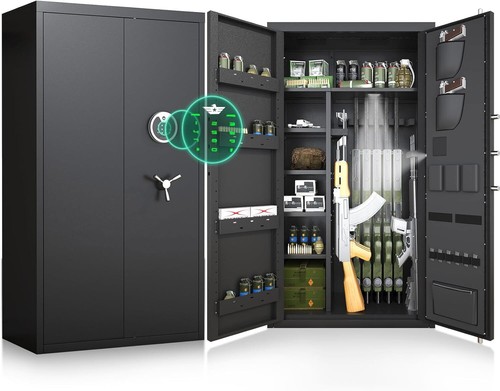
Fingerprint, full digital keypad, mechanical key, and smartphone app. 4.7-star average from verified Amazon buyers. Four independent access paths mean four failure modes have to close simultaneously before you cannot get in. The most failure-resistant biometric pistol safe at the mid-tier price point.
Check price on Amazon →awesafe Biometric XL
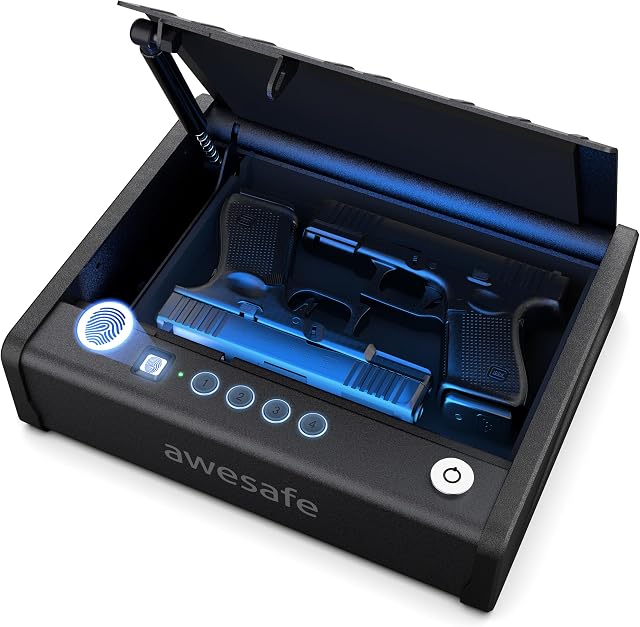
Three-way access (fingerprint, digital PIN, mechanical key) backed by a 4.6-star verified-buyer average. A dependable value pick for buyers who want biometric as primary with a full keypad and mechanical-key backup.
Check price on Amazon →RPNB California DOJ Certified
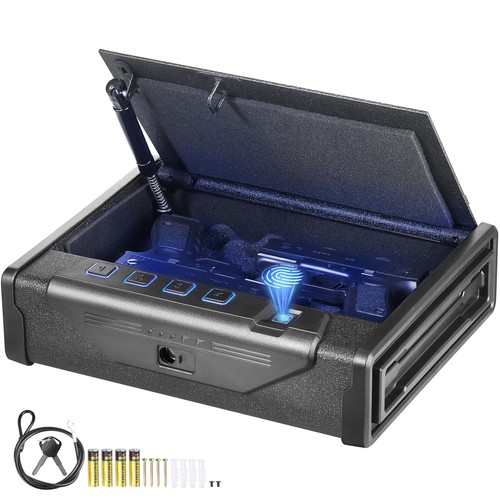
On the California DOJ Firearm Safety Device roster. Auto-open lid, biometric primary access, keypad and mechanical key backup. 4.4-star average. The California DOJ-rostered device in this lineup, and a capable mid-tier safe for any state.
View on Amazon →Lock Types Side by Side
| Safe | Lock Type | Backup Methods | Battery | CA DOJ FSD | Rating | Price | Link |
|---|---|---|---|---|---|---|---|
| BILLCONCH 4-Way Access | Biometric + keypad | Key, smartphone app | Rechargeable (USB) | Check listing | 4.7 | $$ | View |
| awesafe Biometric XL | Biometric + keypad | Mechanical key | Check listing | Check listing | 4.6 | $$ | View |
| RPNB DOJ Certified | Biometric + keypad | Mechanical key | 4 AAA | Yes (verified) | 4.4 | $$ | View |
| Vaultek LifePod 20 | Biometric + keypad | Key, micro-USB backup port | 9V alkaline | Check listing | 4.7 | $$$ | View |
| STOPBOX Tactical | Mechanical (finger-press) | Mechanical only | Not required | Check listing | See listing | $$$ | View |
| ONNAIS Iron PRO | Biometric + keypad | Mechanical key | 4 AA | Check listing | 4.6 | $$ | View |
Price tiers are approximate. $ = under $50, $$ = $50 to 150, $$$ = $150 to 300, $$$$ = over $300. Tap any link for the current Amazon price.
Model Notes
The BILLCONCH 4-Way Access (4.7-star average) is the most failure-resistant pick in this comparison. Fingerprint, full digital keypad, mechanical key, and smartphone app give four independent paths into the safe. Owner reviews consistently cite keypad responsiveness and solid hinge construction. Check price on Amazon.
The awesafe Biometric XL (4.6-star verified-buyer average) pairs fingerprint and keypad as distinct access methods, with a mechanical override key as the final backup, and the XL interior leaves room for a full-size pistol plus a spare magazine. Check price on Amazon.
The RPNB DOJ Certified (4.4-star average) is the only California DOJ FSD roster safe in this comparison. The auto-open lid pops vertically after fingerprint recognition, faster for nightstand access than horizontal-slide designs. The DOJ certification process tests basic resistance to common defeats. View on Amazon.
The Vaultek LifePod 20 (4.7-star average) is the premium pick. IP65 weatherproof rating is the highest in this comparison, making it the right choice for vehicle storage or humid climates where electronics fail faster. The 9V alkaline battery (not included) is rated for up to 1 year, and the micro-USB backup port lets you power the safe externally if the battery runs fully discharged before you can swap it. Note that the LifePod 20 uses a 9V alkaline battery with a micro-USB backup port, not a lithium-polymer battery. Check it on Amazon.
The STOPBOX Tactical is the no-electronics pick, sold as a two-pack. Batteryless mechanical design that opens with a memorized finger-press sequence (one of 81 combinations), with no sensor to maintain. Optimized for single-pistol quick access rather than shelf or multi-firearm storage. Check the current Amazon listing for specs and current rating. View on Amazon.
The ONNAIS Iron PRO (4.6-star average) uses a swift-entry latch design that owner reviews frequently describe as faster to open than standard hinged-lid designs in the same price band. Biometric primary access with keypad and mechanical key backup. View on Amazon.
Owner Experience From Both Camps
Themes pulled from verified-purchase Amazon reviews and active subreddits (/r/CCW, /r/guns, /r/preppers, /r/homedefense) as of June 2026:
- The "biometric failed me" reviews almost always describe a humidity or sensor-age problem. Owners in Florida, Louisiana, and coastal Pacific Northwest report fingerprint sensors becoming unreliable after 18 to 24 months. The countermeasure is consistent with what the specs suggest but rarely what the owner practiced: use the keypad as the actual primary method once the sensor starts degrading rather than waiting for a full failure.
- Keypad PINs get forgotten more often than batteries die. In /r/guns and /r/CCW threads, the most common failure story for keypad-primary safes involves an owner who set the PIN once, changed it once, then could not enter it after 90 days without the backup key. Occasional practice keeps the code muscle-memorized rather than just theoretically known.
- Mechanical safe owners discuss different problems. STOPBOX owners rarely report sensor or battery complaints. Feedback centers on fit (whether a given pistol seats correctly inside the case) and installation stability. Entirely different failure category.
- California DOJ certification is cited as a quality signal beyond legal compliance. The DOJ testing process screens out designs that fail basic defeat resistance. RPNB owners in California frequently mention the roster status as a reason for choosing it over competitors with higher star averages.
- Anchor bolting is the fix for the most common complaint across all lock types. Theft of the entire safe appears in low-rating reviews across biometric, keypad, and mechanical designs. Pre-drilled anchor holes exist on most electronic safes in this comparison. Use them.
These notes are aggregated from public reviews. Safe Picked does not own or test the products listed and does not make first-person claims about hands-on use.
Jacob’s read on this category
The biometric versus keypad framing in 2026 is largely a false split. Almost every pistol safe marketed as biometric includes a full numeric keypad and a mechanical key. The meaningful distinction is between multi-method electronic safes and the no-electronics camp the STOPBOX occupies. The edge case that clarifies which you need: a safe in a vehicle, a garage, or a coastal climate will see capacitive sensors and keypad PCBs both degrade from humidity cycling over 18 to 24 months. That environment belongs in the mechanical camp or in the premium-weatherproof tier (Vaultek IP65), not the budget-biometric tier. For a bedroom nightstand in a climate-controlled home, the budget biometric options are fine, provided you register multiple fingers and occasionally practice the backup PIN before you actually need it.
Biometric vs Keypad FAQ
Which is more reliable for home defense: biometric or keypad?
Both can be reliable when paired with backup access methods. Biometric sensors read in under one second under good conditions but lose accuracy with wet, cold, or dirty fingers. Keypad access is unaffected by hand condition but requires a memorized PIN under stress. Most pistol safes sold today include both. The practical answer is to choose a safe with at least three access methods so no single failure mode locks you out.
Do biometric gun safes work with wet or cold hands?
Capacitive fingerprint sensors lose accuracy when fingers are wet, oily, or very cold. The fix is to register 3 to 5 fingers from both hands at enrollment and keep the keypad PIN memorized as a fallback. Any safe where fingerprint is the only access method is a higher-risk choice for home defense use.
What is the California DOJ Firearm Safety Device requirement?
Under California Penal Code section 23620 and following, a handgun sold or transferred in California must be accompanied by a firearm safety device listed on the California DOJ Firearm Safety Device (FSD) roster, unless the buyer already owns a qualifying DOJ-standard gun safe. The FSD roster is the device storage requirement. The Firearm Safety Certificate (FSC) is a separate buyer certificate. Among the safes in this comparison, the RPNB (B07QFQ179L) is on the California DOJ FSD roster.
What happens when a biometric gun safe battery dies?
When the battery dies, the electronic lock stops working until the battery is replaced. Every electronic safe in this comparison includes a mechanical key override. The Vaultek LifePod 20 also includes a micro-USB backup port that powers the safe externally if the battery is fully discharged. Calendar-based battery replacement every 12 months is a better maintenance schedule than relying on the low-battery indicator.
Is a mechanical gun safe better than biometric or keypad?
A mechanical safe has one major advantage: zero battery dependency. The STOPBOX Tactical requires no battery and no sensor maintenance; it opens with a memorized mechanical finger-press sequence. The trade-off is single-pistol capacity per unit (it is sold as a two-pack), not multi-firearm shelf storage. For vehicle storage or humid environments where electronics fail faster, mechanical is a serious option for primary or backup use.
Evaluation Criteria
Candidates were drawn from live Amazon US listings and scored on access redundancy (minimum three methods preferred for electronic safes), aggregate Amazon rating from verified-purchase buyers, certification listings (California DOJ FSD, UL, ETL where applicable), and price relative to category.
We re-check current Amazon listings on a regular schedule. If you spot a discontinued product or a certification status that has changed, let us know.